
Leonard Bernstein
First American-born conductor to receive international acclaim.

Allan Warren · CC BY-SA 4.0
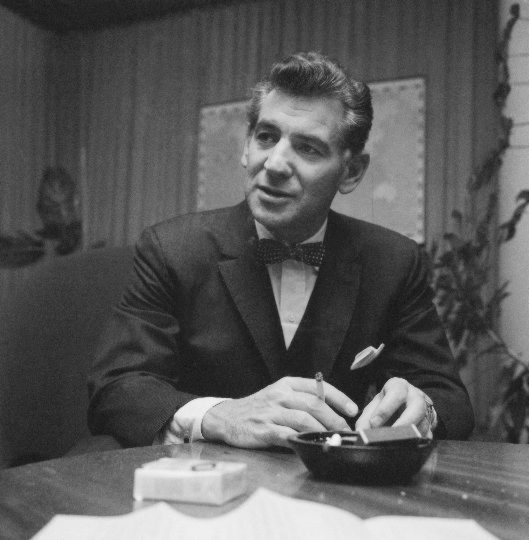
Leonard Bernstein ( BURN-styne; born Louis Bernstein; August 25, 1918 – October 14, 1990) was an American conductor, composer, pianist, music educator, author, and humanitarian. He was the first American-born conductor to receive international acclaim and was considered one of the most important conductors of his time. Music critic Donal Henahan called him "one of the most prodigiously talented and successful musicians in American history." Bernstein's honors include seven Emmy Awards, two Tony Awards, 16 Grammy Awards (including the Lifetime Achievement Award), an Academy Award nomination, and the Kennedy Center Honor in 1981.
- known_for
- Music director of the New York Philharmonic; composer of West Side Story
Verified Timeline
Lore & Background
Leonard Bernstein was born in Lawrence, Massachusetts, to Jewish immigrant parents from Russia. His father Samuel initially opposed his interest in music and refused to pay for piano lessons, so young Leonard taught neighborhood children instead. One student, Sid Ramin, later became Bernstein's orchestrator for West Side Story. At age 10, Bernstein attended his first orchestral concert with the Boston Pops, where he first heard Ravel's Boléro, which impressed him greatly. He made his public piano debut on March 30, 1932, playing Brahms's Rhapsody in G minor at the New England Conservatory of Music. Two years later, he debuted as a soloist with an orchestra, playing Grieg's Piano Concerto in A minor with the Boston Public School Orchestra. Bernstein enrolled at Harvard College in 1935, where he studied music with composers Edward Burlingame Hill and Walter Piston. His senior thesis was titled "The Absorption of Race Elements into American Music" (1939). At Harvard, he met conductor Dimitri Mitropoulos, who influenced his decision to become a conductor, and composer Aaron Copland, whom he regularly sought for advice. After graduating cum laude in 1939, Bernstein studied at the Curtis Institute of Music with Fritz Reiner (conducting), Isabelle Vengerova (piano), and Randall Thompson (orchestration). In 1940, he attended the inaugural Berkshire Music Center at Tanglewood, studying with Serge Koussevitzky, who became a profound lifelong inspiration. Bernstein returned to Tanglewood nearly every summer for the rest of his life. Bernstein became music director of the New York Philharmonic and conducted the world's major orchestras. He was a critical figure in the modern revival of Gustav Mahler's music. A skilled pianist, he often conducted piano concertos from the keyboard. He shared classical music on television through broadcasts including Young People's Concerts with the New York Philharmonic. His compositions include the Broadway musical West Side Story (1957), three symphonies, Serenade (after Plato's Symposium) (1954), Chichester Psalms (1965), the film score for On the Waterfront (1954), and theater works including On the Town (1944), Wonderful Town (1953), Candide (1956), and Mass (1971). Bernstein worked in support of civil rights, protested against the Vietnam War, advocated nuclear disarmament, and raised money for HIV/AIDS research and awareness. He championed Janis Ian at age 15 and her song about interracial love, "Society's Child," on his CBS television show. He conducted Mahler's Resurrection Symphony to mark the death of President John F. Kennedy, and in Israel conducted Hatikvah on Mt. Scopus after the Six-Day War. On Christmas Day 1989, he conducted Beethoven's Symphony No. 9 in Berlin to celebrate the fall of the Berlin Wall. He died of a heart attack in New York on October 14, 1990, aged 72.
Reader's Guide
Leonard Bernstein's significance rests on two pillars: his conducting and his composing. As the first American-born conductor to lead a major American symphony orchestra and receive international acclaim, he broke barriers. His tenure as music director of the New York Philharmonic and his televised Young People's Concerts brought classical music to a mass audience. As a composer, he wrote in many genres—symphonic, ballet, film, theatre, choral, opera, chamber, and piano works. West Side Story (1957) continues to be regularly performed worldwide and has been adapted into two feature films (1961 and 2021). Bernstein was also a critical figure in the modern revival of Gustav Mahler's music, in which he was most interested. He often conducted piano concertos from the keyboard. His humanitarian work included civil rights advocacy, anti-Vietnam War protest, nuclear disarmament advocacy, and HIV/AIDS fundraising. He conducted Mahler's Resurrection Symphony for President Kennedy's death and Beethoven's Symphony No. 9 in Berlin for the fall of the Berlin Wall. His legacy includes a vast collection of audio and video recordings, and his influence on generations of musicians.
Did You Know?
- Bernstein's grandmother insisted his first name officially be Louis, but his parents always called him Leonard; he legally changed it to Leonard at age 16.
- At age 10, Bernstein attended his first orchestral concert with the Boston Pops, where he first heard Ravel's Boléro, which impressed him greatly.
- Bernstein's father initially opposed his music interest and refused to pay for piano lessons, so Bernstein taught neighborhood children—one student, Sid Ramin, later became his orchestrator for West Side Story.
- Bernstein conducted Mahler's Resurrection Symphony to mark the death of President John F. Kennedy, and on Christmas Day 1989 conducted Beethoven's Symphony No. 9 in Berlin to celebrate the fall of the Berlin Wall.
- Bernstein championed Janis Ian at age 15 and her song about interracial love, 'Society's Child,' on his CBS television show.
A Career Spanning Every Musical World
Bernstein occupied an extraordinary range of roles simultaneously—conductor, composer, pianist, educator, author, and humanitarian. He was the first American-born musician to earn international recognition as a conductor and the first to lead a major American symphony orchestra. As music director of the New York Philharmonic, he built a vast archive of audio and video recordings while also touring with the world's leading orchestras. His compositional output defied easy categorization: he wrote symphonies, ballets, operas, chamber music, choral works, film scores, and piano pieces. His Broadway credits include On the Town (1944), Wonderful Town (1953), Candide (1956), and the landmark West Side Story (1957). He also composed the score for Elia Kazan's On the Waterfront (1954), the Serenade based on Plato's Symposium (1954), the Chichester Psalms (1965), and his own Mass (1971). His honors read like a who's-who of American arts recognition: seven Emmys, two Tonys, sixteen Grammys including a Lifetime Achievement Award, an Academy Award nomination, and the Kennedy Center Honor in 1981.
Moments That Defined an Era
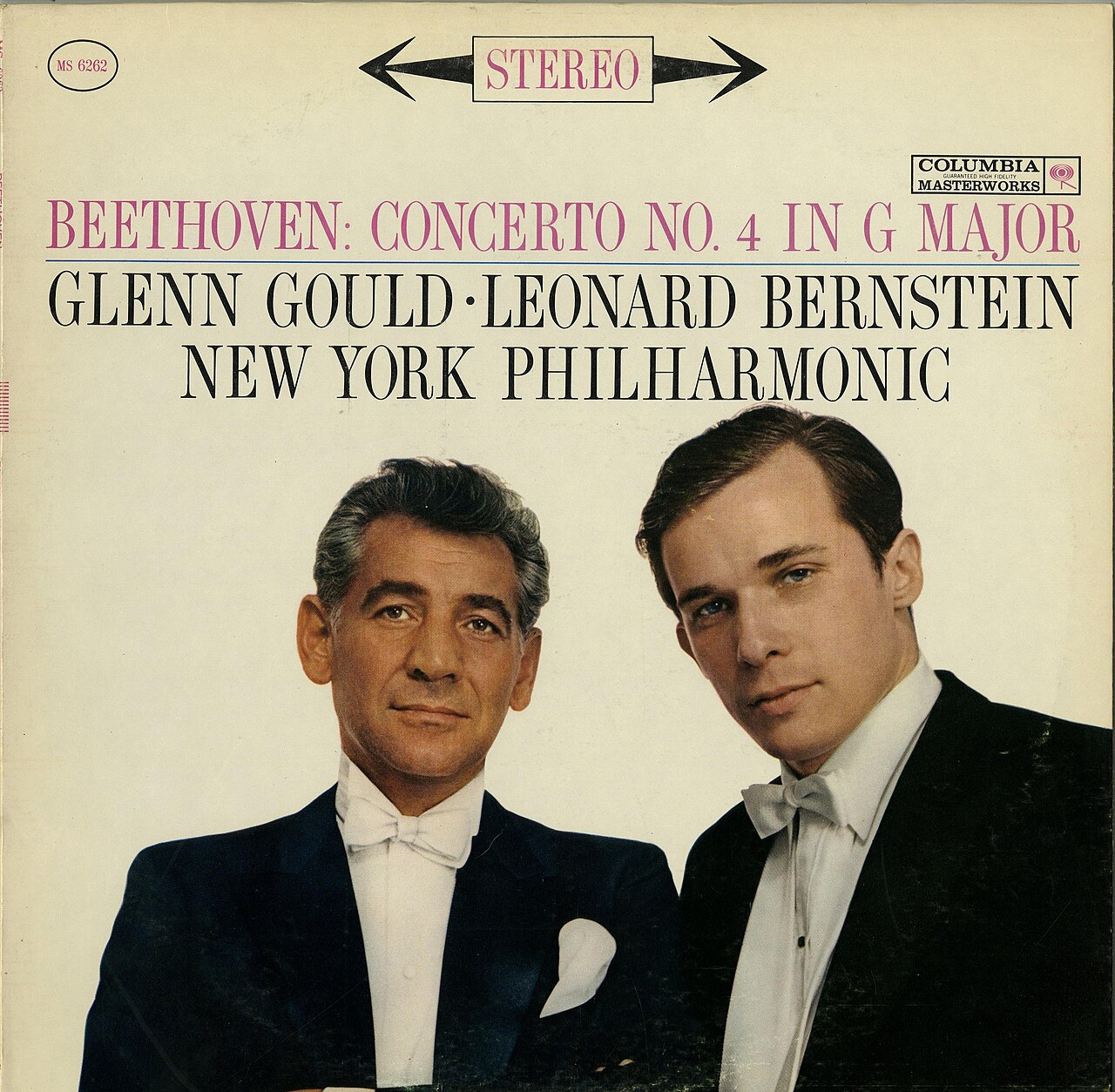
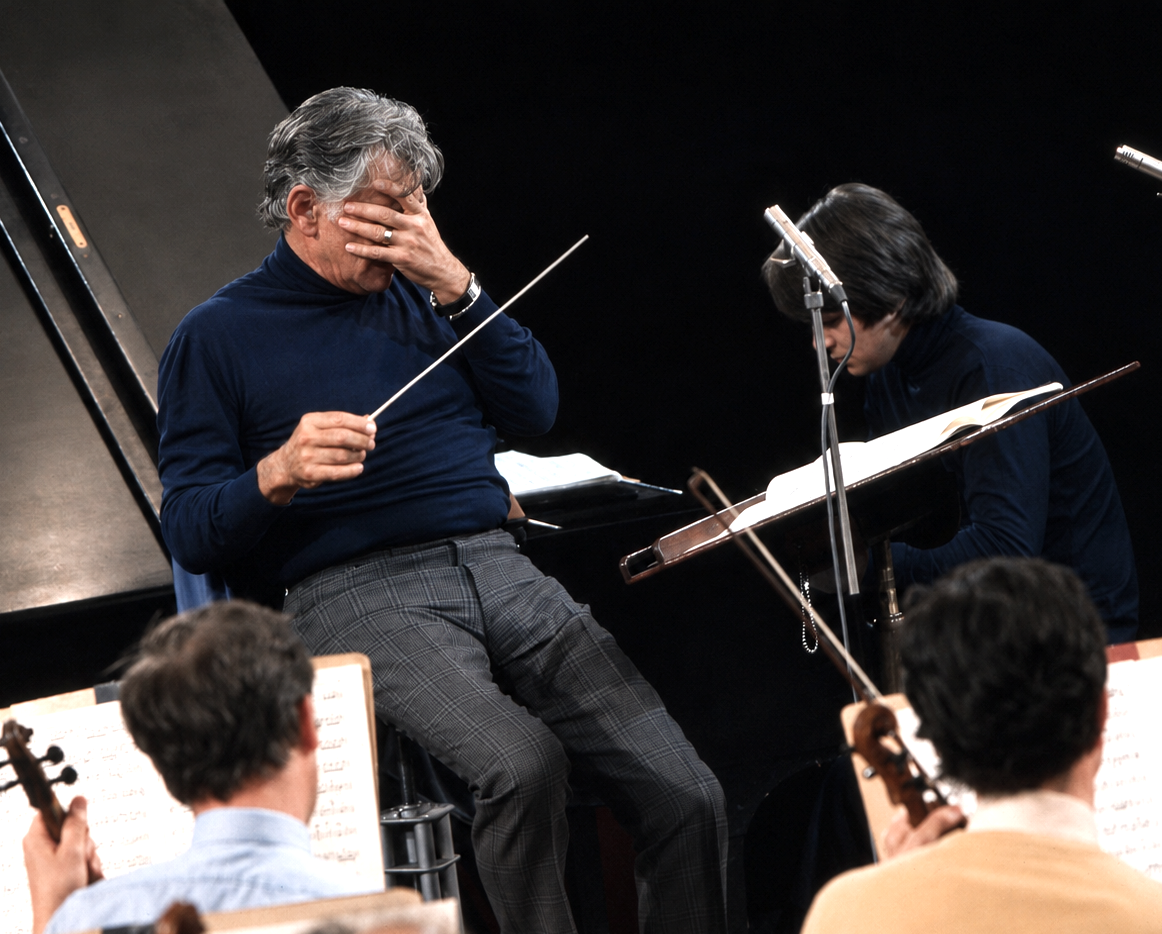
Several performances cemented Bernstein's place in cultural history. He played a pivotal role in the modern revival of Gustav Mahler's music, a composer whose work he found most compelling, and he often conducted piano concertos directly from the keyboard—a testament to his formidable pianistic skill. In the wake of President Kennedy's assassination, Bernstein turned to Mahler's Resurrection Symphony as a communal act of mourning. After the Six-Day War, he traveled to Israel and conducted Hatikvah on Mount Scopus, an event captured in the documentary Journey to Jerusalem. Beyond the concert hall, his television series Young People's Concerts with the New York Philharmonic brought classical music to a mass national and international audience, making him one of the most visible musical ambassadors of the twentieth century.
A Composer Whose Work Outlived Him
Bernstein's compositional legacy is anchored by West Side Story, the 1957 Broadway musical that continues to be staged in theaters around the globe and has been adapted into two feature films—in 1961 and again in 2021. But his output stretched far beyond that single landmark. He composed three symphonies, the Serenade (1954) drawn from Plato's Symposium, the Chichester Psalms (1965), and the deeply personal Mass (1971). His theater works include On the Town, Wonderful Town, and Candide, while his film credits include the score for On the Waterfront. As a pianist, he was equally at home in the recital hall; his early public performances—Brahms's Rhapsody in G minor at age fourteen, followed by a solo orchestral debut with Grieg's Piano Concerto—foreshadowed a career that never confined him to a single discipline. Music critic Donal Henahan called him one of the most prodigiously talented and successful musicians in American history, a judgment his body of work across every genre continues to support.
The Man Behind the Baton
Born Louis Bernstein in Lawrence, Massachusetts, in 1918, he was the son of Jewish immigrants—his father Samuel from what is now Ukraine, his mother Jennie from Russia. His grandmother insisted on the name Louis, but his parents always called him Leonard, and he legally changed it at sixteen. Growing up in Boston and later Newton, he first encountered music on Friday evenings at Congregation Mishkan Tefila, where an innovative rabbi introduced organ music and a mixed choir to New England's Jewish congregations. A distinguished cantor named Izso Glickstein, whom Bernstein later described as someone who could have been an opera singer, became a formative musical influence. His father initially resisted his musical ambitions, refusing to pay for piano lessons, which led the young Leonard to teach neighborhood children instead. One of those students, Sid Ramin, would become a lifelong friend and co-orchestrator of West Side Story. Bernstein's later life was marked by deep civic engagement: he supported civil rights, protested the Vietnam War, advocated nuclear disarmament, raised funds for HIV/AIDS research, and championed a fifteen-year-old singer named Janis Ian and her song "Society's Child" on his CBS television program.
Gallery

Frequently Asked Questions
Who is Leonard Bernstein?
Leonard Bernstein was an American conductor, composer, pianist, and music educator born in 1918 in Massachusetts. He became one of the most celebrated figures in twentieth-century classical music and a trailblazer for American artists on the international stage.
What is Leonard Bernstein most famous for?
He is best known as the long-time music director of the New York Philharmonic and as the composer of the landmark musical West Side Story. His ability to bridge high art and popular culture made him a household name well beyond the concert hall.
What genres did Leonard Bernstein compose in?
Bernstein wrote across a remarkably wide spectrum, including symphonies, ballets, operas, chamber works, and scores for film and the stage. His output shows a composer who refused to be confined to a single genre or audience.
Why is Leonard Bernstein considered important in music history?
He was among the first American-born conductors to earn genuine international acclaim, challenging the long-held dominance of European maestros. His passionate television broadcasts and public lectures also reshaped how ordinary audiences experience and understand orchestral music.
When was Leonard Bernstein born and when did he die?
He was born Louis Bernstein on August 25, 1918, in Lawrence, Massachusetts, and died on October 14, 1990, in New York City. His career spanned roughly seven decades of prolific work as a performer, composer, and educator.
More in Musicians & Composers 1-19
Spotted an error? Know more?
This is a living reference — every entry is fact-audited, and reader corrections feed straight into our audit queue. Suggest an edit · See this site's audit record