
Paco de Lucía
Spanish flamenco guitarist who expanded the genre's boundaries.

Falconaumanni · CC BY-SA 3.0
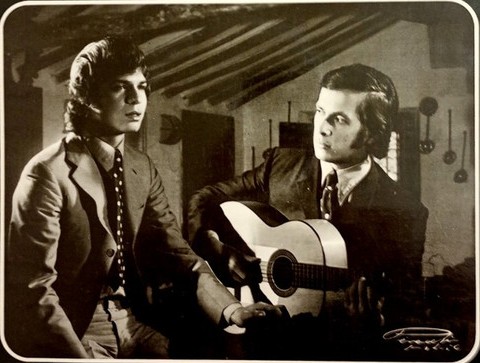
Paco de Lucía, born Francisco Gustavo Sánchez Gómez, was a Spanish virtuoso flamenco guitarist, composer, and record producer. A leading proponent of the new flamenco style, he was one of the first flamenco guitarists to branch into classical and jazz, and is described by authors Richard Chapman and Eric Clapton as a 'titanic figure in the world of flamenco guitar' and by Dennis Koster as 'one of history's greatest guitarists.'
- field
- Flamenco guitarist, composer, record producer
- nationality
- Spanish
- known_for
- New flamenco style, fast picados, jazz-influenced flamenco, collaborations with Camarón de la Isla
Lore & Background
His stage name, Paco de Lucía, honored his mother. His father introduced him to the guitar at a young age and forced him to practice up to 12 hours a day, taking him out of school to focus on guitar. His brother Ramón taught him complex falsetas from Niño Ricardo, whom Paco considered his first guitar hero. At age 11, he made his first public appearance on Radio Algeciras, and a year later won a special prize at a flamenco competition in Jerez de la Frontera. In the 1960s, de Lucía toured with dancer José Greco, met mentors Sabicas and Mario Escudero, and recorded early albums with Ricardo Modrego.
Reader's Guide
Paco de Lucía's significance lies in his transformative role in flamenco music. He was noted for his fast and fluent picados and masterful contrast between percussive rasgueados and sensitive playing, often incorporating abstract chords and jazz-influenced scale tones. These innovations were key to the development of traditional flamenco and the evolution of new flamenco and Latin jazz fusion from the 1970s. His recordings with Camarón de la Isla are considered among the most important in flamenco history. Collaborations with guitarists John McLaughlin, Al Di Meola, and Larry Coryell in the late 1970s brought him wider popularity outside Spain. His legacy endures as a pioneering figure who expanded flamenco's reach into jazz and classical realms.
Did You Know?
- His stage name 'Paco de Lucía' honored his Portuguese mother Lúcia Gomes.
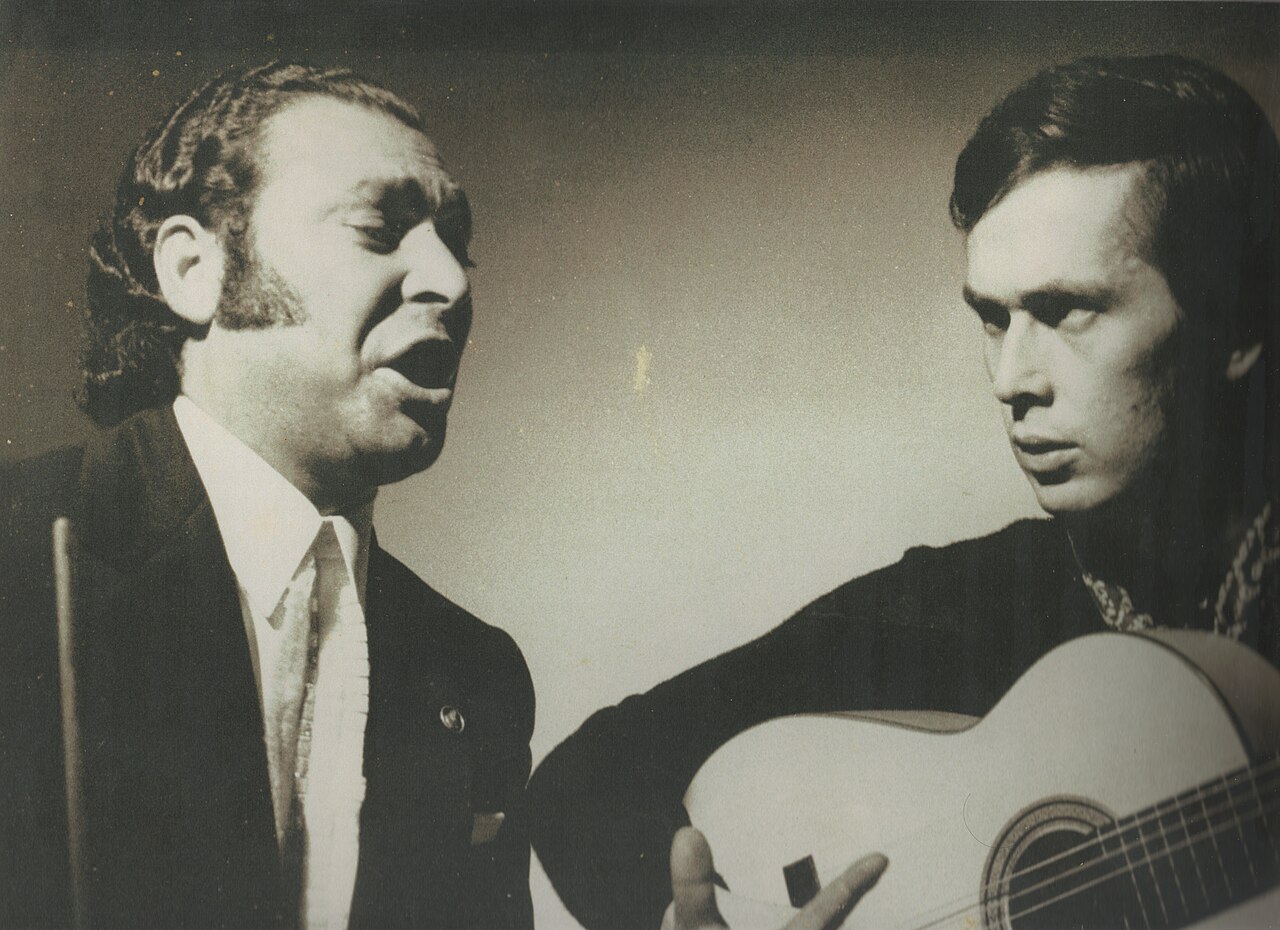
- He recorded ten albums with flamenco singer Camarón de la Isla in the 1970s.
- His composition 'Entre dos aguas' is arguably his best-known work.
Origins and the Forging of a Virtuoso
Paco de Lucía entered the world on December 21, 1947, in Algeciras, in the province of Cádiz, as the youngest of five children. His father, Antonio Sánchez Pecino, was a flamenco guitarist who had studied under a cousin of Melchor de Marchena, and his mother, Lúcia Gomes, was Portuguese. The stage name he would become famous by was a tribute to his mother, following the Andalusian custom of identifying a child by the mother's name rather than the family surname. From the age of five, Antonio imposed a regimen of up to twelve hours of daily practice and eventually removed his son from school entirely to focus on guitar development. Paco later described his relationship with the instrument as natural as a child acquiring language. His older brother Ramón, a devoted admirer of Niño Ricardo, passed along complex falsetas to the young Francisco, who absorbed them effortlessly and began embellishing them in ways that initially irritated Ramón but ultimately revealed a prodigious, out-of-the-ordinary gift. By eleven, Paco had already made his first public appearance on Radio Algeciras and earned a special prize at the Jerez de la Frontera flamenco competition.
A New Language for the Flamenco Guitar
Paco de Lucía's technical signature was built on lightning-fast picados—fluid fingerstyle runs—interwoven with the percussive energy of rasgueados strumming. What set him apart was his instinct for contrast: he would pivot from blistering velocity into tender, almost spoken passages, creating dramatic tension within a single piece. He also wove abstract chord voicings and scale tones drawn from jazz into his compositions, a practice that helped propel the evolution of new flamenco and Latin jazz fusion beginning in the 1970s. His 1967 appearance at the Berlin Jazz Festival, where he absorbed the playing of artists like Miles Davis and Thelonious Monk, ignited a lifelong fascination with jazz that never fully left his guitar voice. In the late 1970s, collaborations with John McLaughlin, Al Di Meola, and Larry Coryell carried his music well beyond Spain's borders, while his 1990 album Zyryab with jazz pianist Chick Corea demonstrated how naturally his flamenco vocabulary could converse with the wider jazz world.
Landmark Recordings and Collaborations
Among the most consequential recordings in flamenco history are the ten albums Paco de Lucía made with singer Camarón de la Isla during the 1970s, a partnership that redefined what the genre could sound like. His solo catalogue includes pieces that have become touchstones: "Río Ancho," "Entre dos aguas," "La Barrosa," "Ímpetu," "Cepa Andaluza," and the tribute "Gloria al Niño Ricardo." In 1981 he assembled the Paco de Lucía Sextet, bringing together his brother the singer Pepe de Lucía and guitarist Ramón de Algeciras, creating a family ensemble that became a vehicle for his evolving compositions. He also recorded with guitarist Juan d'Anyelica on the album Cositas Buenas. His public performances reached a high point in 1992 when he played at Expo '92 in Seville, followed the next year by a concert on Madrid's Plaza Mayor. After 2004, he dramatically scaled back his touring, limiting himself to a handful of concerts per year, mostly in Spain, Germany, and at European summer festivals.
Recognition and Lasting Influence
The critical consensus surrounding Paco de Lucía is unambiguous. Richard Chapman and Eric Clapton, in their reference work Guitar: Music, History, Players, labeled him a "titanic figure in the world of flamenco guitar," while Dennis Koster, writing in Guitar Atlas, Flamenco, called him "one of history's greatest guitarists." He is widely credited as a leading proponent of the new flamenco style and as one of the first flamenco guitarists to meaningfully cross into classical and jazz territory, opening doors that subsequent generations walked through. His innovations in harmonic language, rhythmic contrast, and compositional structure helped reshape traditional flamenco from within while simultaneously seeding the Latin jazz fusion movement of the 1970s and beyond. Biographers have drawn a parallel between his father's iron discipline and the Mozart household, underscoring how his mastery was forged through relentless, almost punishing practice from childhood. Yet the result was a guitarist whose voice felt as spontaneous and conversational as it was rigorously constructed, a paradox that continues to define his legacy.
Gallery
Frequently Asked Questions
What made Paco de Lucía's guitar playing so distinctive?
He was renowned for his extraordinarily fast picado runs and for weaving jazz harmony and classical technique into traditional flamenco structures. This fusion approach set him apart from most of his contemporaries and opened the door for later generations of flamenco players.
Who was Paco de Lucía's most famous musical partner?
His long-standing collaboration with the flamenco singer Camarón de la Isla produced some of the most celebrated recordings in the genre's history. Their partnership blended his innovative guitar work with Camarón's powerful vocal delivery, defining the sound of 1970s and 1980s flamenco.
Why is Paco de Lucía considered so important to guitar history?
Musicians like Eric Clapton have called him a titanic figure in flamenco guitar, and critics have placed him among the greatest guitarists of the twentieth century. His influence extends well beyond Spain, as his work inspired players across jazz, classical, and world music to rethink what a guitar could do within a single performance.
More in Musicians & Composers 1-19
Spotted an error? Know more?
This is a living reference — every entry is fact-audited, and reader corrections feed straight into our audit queue. Suggest an edit · See this site's audit record